Sorting Out Roofer Services in Texas?
Commercial Roofers Dallas sends a crew to flat and low-slope buildings across the area; a site visit comes before any proposal is written.
Dial 469-677-8677; describe the leak, the damage or the project you have in mind.
Owners comparing roofing crews learn the most from how specifically each proposal is written; a short, specific document beats a long, general one. Searching for Roofer Services in Texas usually begins with a leak, a failed inspection or a plan to sell; knowing where water shows up indoors helps narrow the search outside.
What Belongs in Writing Before Work Starts
Look for a bid that states what comes off, what goes on and how the new layers are secured; comparing like with like is only possible when the lists match. Perimeter metal and wall terminations belong in the written scope, not in a verbal promise; the open field of a membrane is rarely where water first gets in.
Find out in advance how hidden damage to the deck or insulation will be handled; hidden conditions are common and should never be a surprise to the paperwork. Debris handling and site protection are part of the work and belong in the proposal; the lot below the roof is part of the job too.
A Close Look at the Surface
A proper roof visit includes walking the surface, checking drains and looking at every seam that can be reached; a roof walk done carefully is the best predictor of a useful bid. Bringing past repair records or inspection reports to the roof walk gives the crew a head start; a leak that follows heavy rain points somewhere different than a leak after a dry week.
Water that lingers near drains or at mid-span is worth recording; ponding points to a design or settlement issue rather than a simple repair. Every penetration through the roof is a place where water can enter, so each one is inspected; equipment areas often tell the story of a roof’s hardest use.
A Schedule That Fits the Business Below
Most business owners cannot close the doors for a roofing project; communication with tenants keeps small annoyances from growing. Work can be broken into sections so only part of the roof is open at any time; weather in the forecast shapes the order in which areas are tackled.
Deliveries of heavy rolls and pallets need a path that does not block customers or tenants; fire lanes and loading docks need to stay clear. Ceiling tiles, shelving and inventory beneath the active section are moved or covered; advance notice lets tenants protect equipment and stock.
Putting Proposals Side by Side
A fair comparison begins with the same square footage, the same layers and the same detail work; the lowest-looking bid is often the one with the most left out. Ask each contractor the same questions about drainage, flashing and fastening and compare what comes back; crews who explain their reasoning tend to build with care.
The way a proposal treats unexpected findings says a lot about how the work will go; a good process matters more than a bold promise. Dates alone matter less than the thinking behind them; communication about delays is part of good service.
Working Safely Along the Perimeter
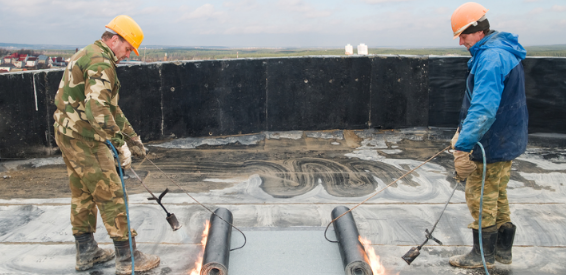
Falls from low-slope roofs happen at the edge or through openings, and both can be prevented with planning; a visible safety setup is a sign of a crew that takes the work seriously. Systems that use heat require a fire plan, including a watch period after the work is done; cold-applied and mechanically attached options avoid open flame altogether.
Gusty afternoons and slick membranes after a storm call for adjusted plans; materials also behave differently in extreme heat. The weight of materials, equipment and crew on an aged roof is worth thinking about before loading; careful staging prevents damage that nobody planned on.
Materials, Drainage and Details Worth Asking About
A roof is a layered assembly, and each layer has a job that the others rely on; the layers underneath are where shortcuts hide. Every project should include a plan for drains, from cleaning to replacement of damaged strainers; keeping drains clear is the simplest maintenance step.
Welded, adhered or taped seams each call for different skills and conditions; a clear explanation of seam work shows real familiarity with a system. Wind-driven rain and strong gusts test the edges of a roof before the middle; spring storms and straight-line winds make edge details important.
What Good Communication Looks Like
Having one person responsible for communication keeps messages from getting lost; a daily note on progress is easy to give and valuable to receive. A visual record of each phase helps answer questions months after the job is done; documentation takes the crew little time and gives the owner a lot.
A simple change form keeps both sides clear about what was added and why; speed matters on a roof, but clarity matters more. Delays from storms are a fact of life in spring, and the best crews keep owners posted; an open roof should never be left unprotected.
Wrapping Up a Commercial Roof Project
The close-out of a roof project should include a walk with the owner or manager; punch-list items are easier to fix before equipment leaves the property. Dumpsters, debris and stray nails should all be gone before the project is called complete; a magnet pass is simple and worth insisting on.
Records of what was installed and where make future maintenance far easier; good records also help when a roof is assessed after a storm. Walking the roof after the first big storm confirms that drains and seams are doing their jobs; a crew that welcomes follow-up is confident in its work.
Small Habits That Protect a Commercial Roof
A walk across the roof in spring and again in fall is a simple maintenance routine; a short checklist and a few photographs are enough to start. Keep drains, scuppers and gutters clear of leaves and debris throughout the season; tree limbs overhanging the roof are worth trimming back.
Anyone who services rooftop units should be asked to report any damage they notice; a sign at the roof hatch is a simple reminder. Early action on a small leak is almost always simpler than a response after repeated storms; keeping a log of leaks helps pinpoint patterns.
Next Step: A Walk Across the Roof
For commercial roof work in Texas, Commercial Roofers Dallas is ready to take the first call; bring photos, past reports or just a description of the problem. Reach us at 469-677-8677 and we will set up a time that works around the business; our team is glad to answer questions before anything is decided.