Questions Before Hiring for Roofer Services in Dallas Texas?
Commercial Roofers Dallas handles roof work on commercial properties in the surrounding towns; every job begins with a walk across the roof itself.
Reach us at 469-677-8677; describe the leak, the damage or the project you have in mind.
Hiring for a commercial roof goes best when every bid describes the work in plain terms; anything left unwritten is open to argument once work begins. A search for Roofer Services in Dallas Texas tends to start after something goes wrong overhead; a few photos and a short history of the roof speed up every conversation.
What a Solid Proposal Includes
Look for a bid that states what comes off, what goes on and how the new layers are secured; vague material names hide big differences between products. The scope should say how rooftop units, vents and drains will be flashed and sealed; a roof is only as tight as its weakest transition.
Owners should ask how surprises under the old surface will be documented and addressed; a plan for the unexpected keeps small findings from becoming large arguments. Cleanup, debris removal and protection of landscaping or parking areas should appear on paper; a clean site is a sign of an organized crew.
What Happens During a Roof Walk
A walk across a flat roof usually takes in the drains, the field, the seams and each rooftop curb; photographs of each problem area turn opinions into evidence. The person who handles building complaints often knows the roof’s trouble spots better than anyone; old patches show where trouble keeps coming back.
Standing water on a flat roof several days after rain is a finding that belongs in the notes; ponding points to a design or settlement issue rather than a simple repair. Every penetration through the roof is a place where water can enter, so each one is inspected; mechanical access paths are worth planning around.
Keeping the Building Open During the Work
Most business owners cannot close the doors for a roofing project; coordination with a property manager is as important as the work itself. Many projects are staged so each area is dried in before the next one is opened; weather in the forecast shapes the order in which areas are tackled.
Loading material onto a roof takes space, and that space has to be set aside in advance; foot traffic below is routed away from the work area. Items inside the building near the work area are protected before tear-off begins; a walk through the interior before work begins is a smart step.
Reading Differences Between Bids
Line up the scope sections of each bid before looking at anything else; differences in thickness, fastening and flashing explain most differences in totals. Call each crew with the same list of questions and note how the replies differ; specific replies beat general reassurance.
Pay attention to how each crew handles unknowns, such as hidden deck damage or wet insulation; transparency about unknowns builds trust before the work starts. Schedule and sequencing also deserve a place in the comparison; a crew that explains its sequence usually keeps to it.
Crew Safety on Low-Slope Roofs
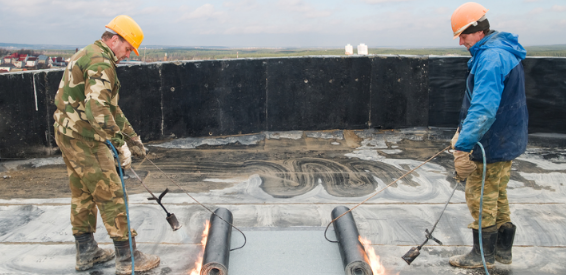
The perimeter, skylight openings and roof hatches call for guardrails, covers or warning lines; safe setup comes before the first roll of material goes up. Hot work such as torch-applied roofing needs fire watches and extinguishers on hand; fire safety is one of the factors that shapes system selection.
Heat, wind and wet surfaces all change how safely work can proceed; a pause for wind or lightning is a sign of good judgment. Heavy loads placed in one spot can stress an older deck, so staging is planned; careful staging prevents damage that nobody planned on.
Asking the Right Questions About Materials
Attention to what lies under the membrane often separates lasting work from quick work; a thorough reply is usually a good sign. Good drainage turns a flat roof into one that sheds water as designed; ponding is usually a design issue, not a surprise.
Welded, adhered or taped seams each call for different skills and conditions; seams are where membrane roofs most often show their age. Corners and perimeters are where wind uplift is strongest on a flat roof; fastener spacing at the perimeter is often tighter than in the field.
Keeping Owners Informed From Start to Finish
A single reliable contact prevents the confusion of passing questions along; a daily note on progress is easy to give and valuable to receive. A visual record of each phase helps answer questions months after the job is done; images taken during work are the best proof of workmanship.
Extra work is discussed and documented, not assumed; speed matters on a roof, but clarity matters more. Weather delays are normal, and a good crew explains them instead of going quiet; schedules shift, and honest updates make that easier to accept.
The Final Walk and What Comes After
Before the crew leaves, a final inspection of the roof surface, drains and flashing should take place; a quick final look can save a return trip. A clean property is the visible sign of a project handled with care; a magnet pass is simple and worth insisting on.
A building file with the roof details helps with every later repair, inspection or sale; good records also help when a roof is assessed after a storm. Early follow-up inspections are a smart habit for any new roof; small issues are easy to correct when they are found quickly.
A Simple Routine for Roof Care
Regular inspections each season catch the small problems that become large ones; regular attention extends the useful life of nearly every system. The single most useful maintenance step is clearing debris from the drains after heavy rain; pooling after a storm is a cue to check the drains first.
Protecting the membrane from tools, ladders and dropped hardware extends the life of the surface; reporting damage promptly avoids bigger problems later. A prompt visit to a leaking roof can prevent damage to insulation, decking and the interior; minor repairs are the surest way to extend a roof.
Start the Conversation About Your Building’s Roof
For commercial roof work in Dallas Texas, Commercial Roofers Dallas is ready to take the first call; the conversation starts with the roof and what the roof needs. Contact 469-677-8677 with the address and a few details about what you are seeing; a clear plan begins with a clear conversation.