Where to Start With Commercial Roofers Near Dallas Texas?
Commercial Roofers Dallas takes on commercial roof work for owners and property managers; the roof is examined first and the paperwork follows.
Dial 469-677-8677; say what you have noticed and where on the property.
The best commercial roofing proposals are the ones a building owner can read and picture; anything left unwritten is open to argument once work begins. A search for Commercial Roofers in Dallas Texas tends to start after something goes wrong overhead; writing down what has already been tried saves time on the first visit.
What Belongs in Writing Before Work Starts
A useful bid separates tear-off from new materials and describes each in some detail; a lump-sum line tells an owner almost nothing. Details such as flashing, counterflashing and pipe boots are worth listing one by one; most leaks on commercial roofs start at details, not in open field areas.
Find out in advance how hidden damage to the deck or insulation will be handled; hidden conditions are common and should never be a surprise to the paperwork. Cleanup, debris removal and protection of landscaping or parking areas should appear on paper; good housekeeping starts with an agreed plan.
On the Roof Before Any Proposal
The crew should cover the whole roof, from drains and scuppers to curbs, seams and edge metal; a roof walk done carefully is the best predictor of a useful bid. Bringing past repair records or inspection reports to the roof walk gives the crew a head start; where and when a leak appears matters as much as how much water comes in.
Ponding water after a storm is one of the first things worth noticing on a low-slope roof; slope and drains deserve as much attention as the membrane itself. The crew checks how equipment is flashed and whether supports sit on pads or directly on the membrane; foot traffic near units is a common source of punctures.
A Schedule That Fits the Business Below
Commercial roof work often happens above people who keep working all day; a sequence that protects the interior is part of the job. Phasing the job in sections limits how much of the building is exposed to weather at once; dry-in at the end of each day is the standard to look for.
Access for trucks, lifts and dumpsters has to be arranged with the property owner ahead of time; fire lanes and loading docks need to stay clear. Occupants are told which areas are under work and which are safe to use; clear messages to tenants cut down on calls during the job.
Putting Proposals Side by Side
Before looking at any totals, check that the proposals describe the same roof system and the same details; the lowest-looking bid is often the one with the most left out. Questions about process often reveal more than questions about materials; specific replies beat general reassurance.
An honest bid admits that some conditions only show up once the old roof is open; transparency about unknowns builds trust before the work starts. Timeline details, crew size and start conditions are part of the comparison too; schedules built around the building tend to hold up better.
How a Careful Crew Handles Roof Hazards
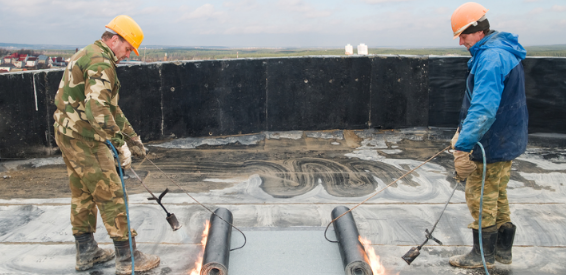
Roof edges, skylights and open hatches are the main fall hazards on a commercial building; a tidy site is almost always a safe one. Heat-applied membranes need extra attention to fire safety during and after installation; a question about the fire plan is reasonable for any heat-applied system.
Gusty afternoons and slick membranes after a storm call for adjusted plans; pacing the work to the weather protects both people and the roof. The weight of materials, equipment and crew on an aged roof is worth thinking about before loading; careful staging prevents damage that nobody planned on.
The Parts of a Roof You Do Not See
Beneath the visible surface, insulation and fastening carry much of the roof’s performance; a thorough reply is usually a good sign. Water that cannot leave the roof will eventually find a way in; drain bowls and strainers are small parts with large consequences.
Welded, adhered or taped seams each call for different skills and conditions; careful seam work is slow work, and that is a good thing. A crew that cares about perimeters is thinking about storm season; heavy gusts can lift loose edges and peel membrane back.
What Good Communication Looks Like
Having one person responsible for communication keeps messages from getting lost; a daily note on progress is easy to give and valuable to receive. A visual record of each phase helps answer questions months after the job is done; images taken during work are the best proof of workmanship.
If the scope changes, the new scope is agreed on paper before anyone picks up a tool; clear paperwork is not a sign of distrust but of professionalism. Delays from storms are a fact of life in spring, and the best crews keep owners posted; honest, frequent contact is the heart of a smooth project.
Finishing the Job Properly
Walking the finished roof together allows questions to be answered on the spot; a clear finish prevents questions from lingering. A clean property is the visible sign of a project handled with care; cleanup is part of the work and not a favor.
Keep the paperwork from the project in one place, including the scope, photos and any change records; knowing the exact system on the roof speeds up every repair. Walking the roof after the first big storm confirms that drains and seams are doing their jobs; routine checks keep minor findings from turning into leaks.
Maintenance That Extends a Roof’s Life
Seasonal checks, along with a look after severe storms, are the heart of roof maintenance; small repairs are always easier than big ones. Rooftop debris, from leaves to trash, blocks drainage and holds moisture against the membrane; pooling after a storm is a cue to check the drains first.
Anyone who services rooftop units should be asked to report any damage they notice; walk pads are inexpensive protection around high-traffic areas. A prompt visit to a leaking roof can prevent damage to insulation, decking and the interior; wet insulation is the real damage that waiting causes.
Talk It Over With a Crew That Walks the Roof First
Anyone responsible for a commercial building in Dallas Texas can start with a call to Commercial Roofers Dallas; questions are welcome at every stage of the process. Contact 469-677-8677 with the address and a few details about what you are seeing; a clear plan begins with a clear conversation.